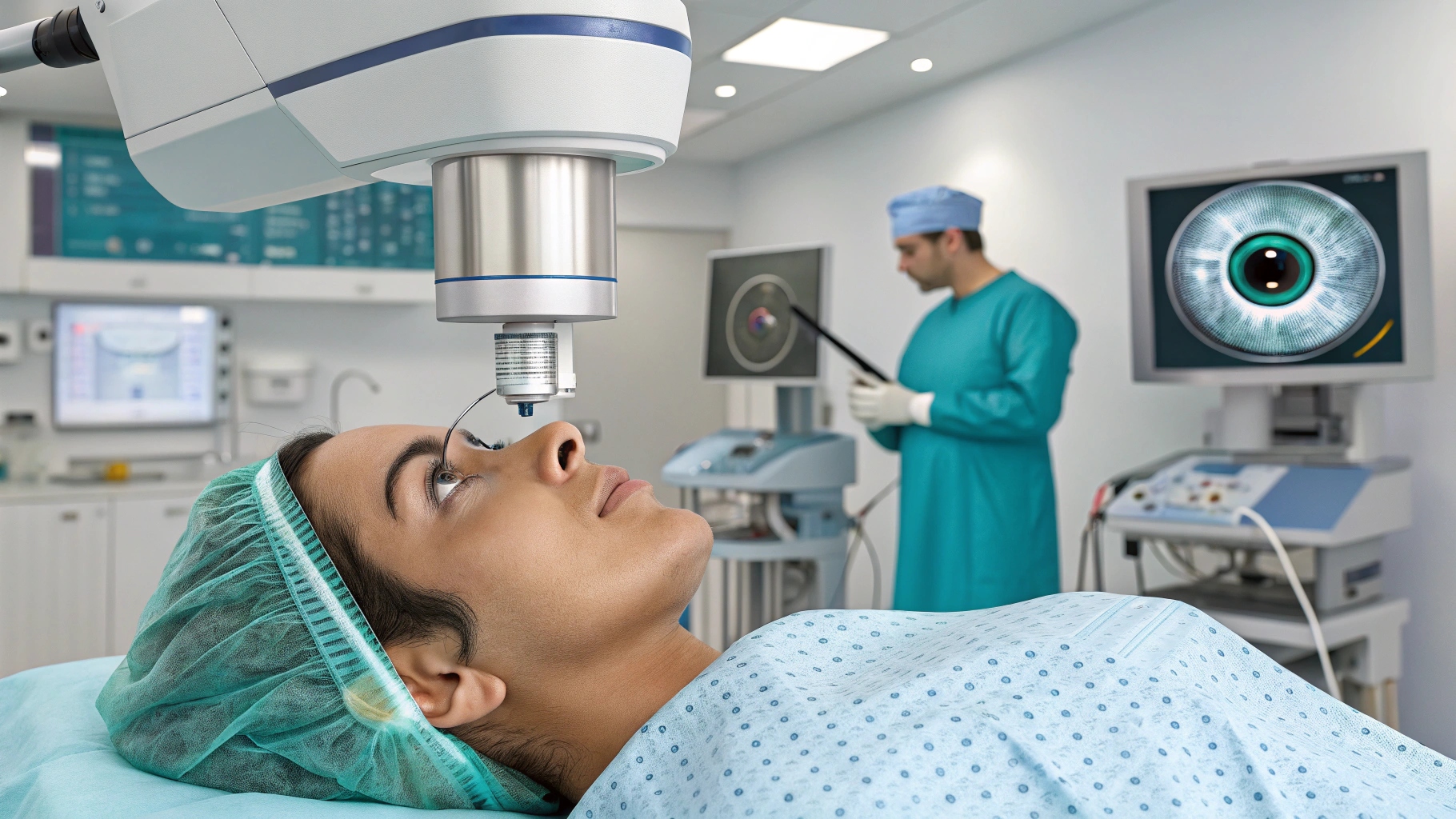
LASIK eye surgery has become a popular vision correction procedure for those seeking freedom from glasses or contact lenses. If you’re considering Lasik Eye Surgery in Lucknow or elsewhere, understanding what happens in LASIK surgery, the LASIK eye surgery procedure steps, and what to expect can help you make an informed decision. This blog covers everything from how LASIK eye surgery works to LASIK surgery recovery time, risks and complications of LASIK, and more, including comparisons like LASIK vs PRK.
What is LASIK Surgery?
LASIK, which stands for Laser-Assisted In Situ Keratomileusis, is an FDA-approved procedure designed to correct refractive errors such as nearsightedness (myopia), farsightedness (hyperopia), and astigmatism. By reshaping the cornea using an excimer laser, LASIK improves how the eye focuses light, often resulting in 20/20 vision or better. It’s an outpatient procedure, meaning you can go home the same day.
If you’re wondering, “is LASIK surgery safe?” or “ Does LASIK eye surgery hurt?”, read on as we dive into the details.
LASIK Surgery Eligibility
Not everyone is a candidate for laser eye correction. To determine if you’re eligible for LASIK, an ophthalmologist will evaluate factors like:
- Age: Typically, candidates should be at least 18 years old.
- Stable vision: Your prescription should be stable for at least a year.
- Corneal thickness: A sufficient corneal thickness is necessary for creating a corneal flap.
- Overall eye health: Conditions like severe dry eyes, corneal scars, or eye trauma may disqualify you.
- General health: Certain medical conditions, like autoimmune disorders, may affect eligibility.
If LASIK isn’t suitable, alternatives like photorefractive keratectomy (PRK) or other refractive surgery options may be recommended.
How LASIK Eye Surgery Works
The LASIK eye surgery procedure steps are precise and typically take about 10-15 minutes per eye. Here’s a breakdown of how LASIK eye surgery is done:
- Preparation: Before the procedure, your eye doctor will administer eye numbing drops to ensure comfort. A suction ring is placed on the eye to stabilize it.
- Creating the Corneal Flap: Using a femtosecond laser or a mechanical microkeratome, the eye surgeon creates a thin corneal flap. This flap is gently lifted to expose the underlying corneal tissue.
- Reshaping the Cornea: An excimer laser delivers precise pulses of laser energy to reshape the cornea, correcting refractive errors. The laser removes microscopic amounts of tissue to adjust how light enters the eye.
- Flap Replacement: The corneal flap is carefully repositioned. No stitches or bandages are needed, as the flap naturally adheres to the cornea.
- Post-Surgery Care: You’ll receive special eye drops to prevent infection and aid healing. Your eyes heal quickly, with most patients noticing improved vision within hours.
The procedure is laser-assisted and highly controlled, making it a safe surgery for most eligible candidates.
Is LASIK Surgery Painful?
A common question is, “Does LASIK eye surgery hurt? ” Thanks to eye numbing drops, the procedure is virtually painless. You may feel slight pressure when the suction ring is applied or during flap creation, but discomfort is minimal. After surgery, some patients experience mild irritation or a gritty sensation, but this typically resolves within a few hours.
What to Expect During LASIK
Here’s what you can expect before and after LASIK surgery:
Before LASIK Surgery
- Consultation: Your ophthalmologist will conduct a thorough eye exam to confirm LASIK suitability.
- Pre-Surgery Care: You’ll be advised to stop wearing contact lenses for a few weeks before the procedure, as they can alter corneal shape.
- Questions for Your Doctor: Ask about potential LASIK surgery complications, how much LASIK costs, or whether LASIK is covered by insurance.
During LASIK Surgery
- The procedure is quick, typically completed in under 30 minutes.
- You’ll be awake but relaxed, thanks to eye numbing drops.
- The laser system is computer-guided for precision.
After LASIK Surgery
- Immediate Recovery: Vision may be blurry initially, but most patients see significant improvement within 24 hours.
- Post-Surgery Instructions: Avoid rubbing your eyes, swimming, or strenuous activities for a few weeks. Use prescribed special eye drops to prevent dry eyes after LASIK.
- Follow-Up Visits: Your eye doctor will monitor your progress to ensure proper healing.
LASIK Surgery Recovery Time
The LASIK surgery recovery time is relatively short. Most patients resume normal activities within 1-2 days, though full recovery may take a few weeks. Here’s a timeline:
- Day 1: Vision improves significantly, but avoid driving or straining your eyes.
- Week 1: Attend follow-up appointments to check healing progress.
- Month 1-3: Vision stabilizes, and any mild side effects like dry eyes typically resolve.
To support recovery, follow your ophthalmologist’s advice and avoid activities that could cause flap complications.
Risks and Complications of LASIK
While LASIK is considered a safe surgery, no medical procedure is without risks. Potential complications include:
- Dry eyes after LASIK: Temporary dryness is common but usually resolves with dry eye treatment.
- Flap complications: Rarely, the corneal flap may shift, requiring a second LASIK procedure.
- Glare or halos: Some patients experience visual disturbances, especially at night, which often improve over time.
- Under- or over-correction: Additional laser surgery or enhancement surgery may be needed for optimal results.
- Infection: Rare but treatable with special eye drops.
Choosing an experienced ophthalmologist at a reputable eye hospital (e.g., Karnataka eye hospital, Gujarat eye hospital, or Odisha eye hospital) minimizes risks.
LASIK vs PRK
When comparing LASIK vs PRK, both are effective laser vision correction procedures, but they differ in approach:
- LASIK: Involves creating a corneal flap and has a faster recovery (1-2 days). Ideal for most patients with sufficient corneal thickness.
- PRK: Removes the outer corneal layer instead of creating a flap, with a longer recovery (about a week). Suitable for those with thin corneas or active lifestyles.
Your refractive surgeon will recommend the best option based on your eye health.
Cost of LASIK Surgery
The cost of LASIK surgery varies depending on location, technology, and the eye surgeon’s expertise. For example:
- Lasik Eye Cost in India: Typically ranges from ₹30,000 to ₹1,00,000 per eye, depending on the laser system and eye hospital.
- how much LASIK costs in India Advanced procedures using femtosecond lasers may cost more.
- Is LASIK covered by insurance? Most insurance plans consider LASIK an elective procedure, but some offer partial coverage. Check with your provider.
Why Choose LASIK?
LASIK eye surgery offers a life-changing opportunity to correct refractive errors and achieve clear vision without lenses. Whether you’re exploring Lasik Eye Surgery in Lucknow or another region, the procedure’s safety, quick recovery, and high success rate make it a top choice. By understanding how LASIK eye surgery works, what to expect during LASIK, and the risks and complications of LASIK, you can confidently decide if it’s right for you.