Comprehensive Myopia Care

Myopia (Nearsightedness) Treatment in Lucknow

Abhinav Drishti Eye Hospital offers a range of evaluated treatment options for myopia — including LASIK, ICL, SMILE, and Ortho-K — for children, teenagers, and adults. Our team will assess your eyes and discuss which options may be suitable for you.

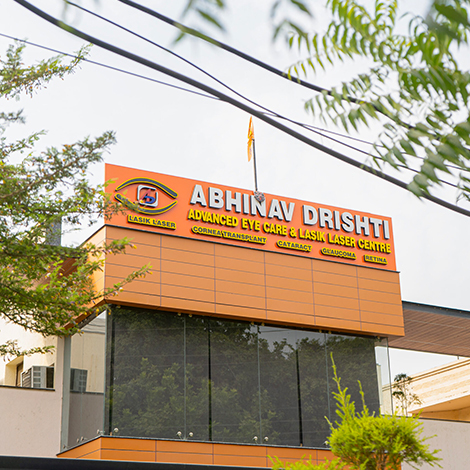
Comprehensive Myopia Care
About Abhinav Drishti

About the Hospital

  • Established eye care practice in Lucknow with experienced ophthalmologists
  • Multiple refractive surgery options available
  • Treatment plans based on individual eye evaluation

Treatment May Be Considered For

Children (age 6+)
Myopia management
Teenagers
Ortho-K or atropine drops (under medical supervision)
Adults (18+)
LASIK or SMILE surgery, subject to eligibility
Higher myopia (-6D and above)
ICL surgery may be considered
Thin cornea cases
ICL or RLE surgery may be alternatives
Diabetic patients
Treated under specific medical protocols

What is Myopia?

myopia

Myopia, also known as nearsightedness, is a common refractive error where nearby objects appear clear but distant objects look blurry. This occurs when the eyeball is slightly elongated or the cornea is too curved, causing light to focus in front of the retina instead of directly on it.

According to global eye health research, myopia prevalence is increasing worldwide, particularly among children and young adults, due to factors such as increased near-work and reduced time spent outdoors (World Health Organization; National Eye Institute).

If untreated or unmonitored, high myopia can be associated with an increased risk of certain eye conditions later in life, including retinal detachment, glaucoma, and myopic macular degeneration. Regular eye examinations help in early detection and monitoring.

Myopia Power Scale (Diopters) — General Guidance:

Myopia Level General Guidance
Mild Myopia (-0.25 to -3.00D) Often managed with glasses, contact lenses, or refractive surgery depending on suitability
Moderate Myopia (-3.00 to -6.00D) LASIK, SMILE, or ICL may be options after evaluation
High Myopia (-6.00D and above) ICL is often considered, subject to individual assessment
Note: The right treatment depends on a comprehensive eye examination. This information is general and not a substitute for professional medical advice.

Symptoms of Myopia

Blurry distance vision
Difficulty seeing boards, signboards, or number plates clearly
Frequent headaches
Sometimes associated with eye strain, especially while reading
Eye fatigue
Eyes may feel tired after periods of reading or screen use
Night vision difficulties
Trouble seeing clearly while driving or in low light
Squinting
Narrowing the eyes in an attempt to see more clearly
Sitting close to screens
Children may sit very close to the TV or hold books near their face

If you or your child experience these symptoms, we recommend scheduling an eye examination for proper diagnosis.

Causes and Risk Factors of Myopia

Genetics (Family history):
Research indicates that children with one or both parents who have myopia have a higher likelihood of developing it, though exact figures vary across studies.
Extended near-work and screen time:
Prolonged use of mobile phones, laptops, and tablets at close range is associated with increased myopia risk in several studies.
Reduced outdoor time:
Multiple studies have found an association between less time spent outdoors and higher rates of myopia in children, possibly related to natural light exposure.
Reading habits:
Reading at very close distances or in dim lighting may contribute to eye strain and is sometimes associated with myopia progression.
Lighting conditions:
Poor lighting during study or near-work can increase eye strain.
Urban environment:
Some studies suggest children in urban settings show higher myopia rates, potentially linked to lifestyle and reduced outdoor activity.

Myopia Treatment in Lucknow: Available Options

The following treatments are available at Abhinav Drishti Eye Hospital. Suitability for each option depends on a detailed eye examination, including corneal thickness, refractive power, age, and overall eye health.

1

LASIK Eye Surgery

LASIK (Laser-Assisted In Situ Keratomileusis) reshapes the cornea using a laser so that light focuses more accurately on the retina. It is typically a quick outpatient procedure with most patients noticing improved vision within a day or two.

Variants offered:
  • Bladeless Femtosecond LASIK
  • Contoura Vision (topography-guided, customized mapping)
  • Sub-Bowman's Keratomileusis (SBK) for thinner corneas
General eligibility considerations:

Typically considered for power range of approximately -1D to -10D, age 18 and above, refractive stability for at least 12 months, and adequate corneal thickness. Final eligibility is determined after a comprehensive eye examination.

Possible Risks and Limitations of LASIK:
  • Temporary dry eyes
  • Glare, halos, or light sensitivity, particularly at night
  • Under-correction or over-correction, sometimes requiring an enhancement procedure
  • Temporary fluctuations in vision during healing
  • Rare risk of infection or flap-related complications
2

ICL Surgery (Implantable Collamer Lens)

ICL involves implanting a specially designed lens inside the eye, in addition to the eye's natural lens. Unlike LASIK, no corneal tissue is removed, and the lens can be removed if needed in the future. This option is often considered for higher degrees of myopia or thinner corneas.

Key features:
  • May be considered for approximately -3D to -20D, subject to evaluation
  • Does not involve reshaping the cornea
  • Includes UV-protective lens material
  • Considered a reversible procedure
General eligibility considerations:

Often discussed with patients who have higher refractive power, thinner corneas, dry eye history, or who are not suitable candidates for LASIK. Typically considered for ages 21-45, subject to evaluation.

Possible Risks and Limitations of ICL:
  • Increased intraocular pressure in some cases
  • Risk of cataract formation over time (more relevant in certain patient groups)
  • Rare risk of infection
  • Possible need for lens repositioning or removal in uncommon cases
3

SMILE / SILK Laser Surgery

SMILE (Small Incision Lenticule Extraction) is a flapless laser procedure where a small lenticule of corneal tissue is removed through a tiny incision. Some studies suggest this approach may be associated with a lower incidence of dry eye symptoms compared to traditional LASIK, though individual outcomes vary.

Key features:
  • No corneal flap is created
  • Small incision approach
  • Often associated with a relatively quick return to normal activities
General eligibility considerations:

Typically considered for approximately -1D to -10D, subject to corneal evaluation. May be discussed for patients concerned about dry eyes or those involved in contact sports.

Possible Risks and Limitations of SMILE:
  • Temporary dry eyes (though potentially less than LASIK in some studies)
  • Possible under-correction requiring enhancement
  • Temporary visual fluctuations during healing
  • Rare risk of infection
4

Orthokeratology (Ortho-K) Lenses

Ortho-K involves wearing specially designed rigid contact lenses overnight that temporarily reshape the cornea, allowing clearer vision during the day without glasses or lenses. Some clinical studies suggest Ortho-K may help slow myopia progression in children, though results can vary between individuals.

Key features:
  • Worn overnight; removed during the day
  • Non-surgical and considered reversible
  • May be discussed as part of a myopia management plan for children
General eligibility considerations:

Often considered for children and teenagers with progressive myopia, typically within a power range of approximately -0.5D to -6D, subject to corneal assessment.

Possible Risks and Limitations of Ortho-K:
  • Risk of corneal infection if lens hygiene is not properly maintained
  • Temporary blurred vision if lenses are not worn consistently
  • Requires regular follow-up visits to monitor corneal health
  • Effectiveness varies between individuals
5

Low-Dose Atropine Eye Drops

Low-concentration atropine eye drops (such as 0.01%) are used in some myopia management programs for children. Several published studies have investigated their role in slowing myopia progression, though research findings on effectiveness vary, and atropine should only be used under medical supervision.

Key features:
  • Typically administered as a nightly drop
  • Used as part of a broader myopia management plan
  • Requires regular monitoring by an eye doctor
General eligibility considerations:

Often discussed for children with progressive myopia, typically considered after assessment by a pediatric eye specialist.

Possible Risks and Limitations of Atropine Drops:
  • Temporary light sensitivity or near-vision blur in some patients
  • Requires consistent, supervised use
  • Long-term effects continue to be studied
  • Not suitable for all children — requires individual assessment
6

Spectacles & Contact Lenses

Glasses and contact lenses with concave (minus) lenses correct refractive error but do not change the underlying eye structure. Some specialized options, such as defocus-incorporated lenses (e.g., DIMS) and certain multifocal contact lenses, have been studied for their potential role in myopia management for children.

Options include:
  • Standard prescription glasses and contact lenses
  • Myopia management lenses (DIMS-type designs) — studied for potential effect on progression in children
  • Multifocal contact lenses — sometimes considered for teenagers
  • Anti-glare and blue-light filtering lens coatings for screen use
Possible Limitations:
  • Do not address the underlying refractive error permanently
  • Myopia management lens designs may not be effective for every child
  • Requires periodic prescription updates as power changes

About Abhinav Drishti Eye Hospital

Abhinav Drishti Eye Hospital is an ophthalmic care facility located in Mahanagar, Lucknow, providing a range of eye care services including refractive surgery, cataract treatment, retina care, glaucoma management, and pediatric eye care.

What we offer:
Experienced Ophthalmology Team

Our doctors hold qualifications including M.S. Ophthalmology from K.G.M.C., Lucknow, with fellowship training from L.V. Prasad Eye Institute, Hyderabad.

Diagnostic Equipment

Equipment for corneal topography, pachymetry, and refractive assessment to support treatment planning.

Pediatric Eye Care Services

Includes assessment and management options for children with myopia, under specialist supervision.

Transparent Discussion of Costs

We aim to provide clear information about treatment costs during your consultation, based on your specific case.

Individualized Evaluation

Each patient undergoes an eye examination before any treatment recommendation is made.

Location

Ground-floor accessible facility in Mahanagar, Lucknow, with parking available.

Follow-Up Care

Patients undergoing surgical procedures are advised on a follow-up schedule appropriate to their treatment.

Insurance & TPA Support

We work with several TPAs for cashless treatment processing, subject to policy terms. Please confirm your specific coverage with your insurer and our billing desk.

What to Expect: Treatment Process

Step 1: Initial Consultation

Schedule a consultation by phone or through our website. Our team will guide you on appointment timing and any preparation needed (such as discontinuing contact lens use before testing).

Step 2: Comprehensive Eye Evaluation

This includes corneal topography, pachymetry (corneal thickness measurement), refraction testing, pupil size measurement, and tear film assessment to help determine which treatments may be suitable for you.

Step 3: Doctor Consultation

Your results are reviewed with you by our ophthalmologist, who will discuss the treatment options that may be appropriate based on your eye health, along with their benefits and limitations.

Step 4: Treatment Plan Discussion

If you decide to proceed, a treatment plan is prepared based on your individual measurements. Costs, expected recovery time, and any risks specific to your case will be discussed with you in detail.

Step 5: Procedure Day

Surgical procedures are performed in our operating theatre following standard safety protocols. Procedure duration varies by treatment type.

Step 6: Post-Treatment Follow-Up

A follow-up schedule is provided based on your specific procedure. Please contact us if you experience any unexpected symptoms after treatment.

Myopia Treatment for Children in Lucknow

Myopia in children is an area of growing interest among eye care professionals, with research indicating rising prevalence linked to factors such as increased near-work and reduced outdoor time.

Signs to watch for in children:

  • Difficulty seeing the classroom board
  • Sitting close to the television
  • Frequent headaches
  • Squinting
  • Difficulty during reading

If you notice these signs, we recommend scheduling an eye examination for your child.

Orthokeratology (Ortho-K): Overnight lenses that may help manage vision during the day and have been studied for a potential role in slowing myopia progression in some children.
Low-Dose Atropine Drops: Used in some myopia management programs under medical supervision; effectiveness and suitability vary by individual.
Myopia Management Glasses & Lenses (DIMS / Multifocal designs): Specialized lens designs that have been studied for potential benefits in managing myopia progression in children.
Lifestyle Recommendations: General guidance such as encouraging outdoor time, following the 20-20-20 rule (a 20-second break to look at something 20 feet away every 20 minutes), and ensuring adequate lighting during study, based on general eye health recommendations.

All treatment decisions for children should be made in consultation with a pediatric eye specialist, considering the child's individual eye health and needs.

Patient Experiences

I must say that its one of the best Eye Care clinic of the city. Clean well maintained Covid guidelines & systematic with all the latest technology treatment. I love the environment.

Kaify Jha

One of very good eye hospital of Lucknow. Equipped with all smart things. Rate is slightly above in the budget, but treatment is really very impress. Dr. And staffs are so good and co-operative.

Ajay Kumar

His approach towards the patient centricity is very high. Cool, calm and balanced approach are the key words I would like to use for this gentleman.

Ravi Sharma

Why Choose Abhinav Drishti Eye Hospital?

Experienced Eye Specialists

Comprehensive eye care provided by qualified ophthalmologists with expertise in refractive surgery, cataract, retina, glaucoma, and pediatric ophthalmology.

Advanced Diagnostic Technology

Modern equipment for detailed eye evaluation, including corneal topography, pachymetry, and retinal assessment.

Personalized Treatment Planning

Every patient undergoes a thorough examination before treatment recommendations are made.

Wide Range of Vision Correction Options

LASIK, Contoura Vision, SMILE, ICL, Ortho-K, and myopia management solutions available under one roof.

Child & Adult Eye Care Services

Dedicated care for children with progressive myopia as well as adults seeking vision correction.

Patient-Centered Approach

Clear discussion of treatment options, expected outcomes, recovery timelines, and costs before proceeding.

Convenient Location in Lucknow

Easily accessible ground-floor facility in Mahanagar with parking availability.

Comprehensive Follow-Up Care

Structured post-treatment monitoring to support recovery and long-term eye health.

Our goal is to help every patient make informed decisions about their vision through accurate diagnosis, transparent communication, and individualized care.

Take the Next Step Toward Clear Vision

Myopia is a common but manageable eye condition, and a wide range of treatment options exist depending on age, refractive power, and individual eye health. Whether you are exploring LASIK, ICL, SMILE, or myopia management options for your child, the right approach starts with a thorough eye examination.

For those seeking myopia treatment in Lucknow, Abhinav Drishti Eye Hospital offers experienced ophthalmologists, diagnostic facilities, and individualized treatment planning to help you understand your options. Contact us to schedule a consultation and discuss the best path forward for your eye health.

Contact Us for Myopia Treatment in Lucknow

Location

B-719, Sector-C Mahanagar, Lucknow, Uttar Pradesh – 226006

Email

abhinavdrishti@gmail.com

Contact Us

Emergency: +91 94159 98889

LASIK Helpline: +91 70803 62121

If you are looking for myopia treatment in Lucknow, our team is available to answer your questions and schedule a consultation at our Mahanagar facility.

Frequently Asked Questions (FAQs)

Hyperopia (farsightedness) is commonly corrected using convex (plus-powered) lenses. These lenses help focus light directly onto the retina, improving near vision. Depending on the patient's needs, glasses, contact lenses, or refractive procedures may be recommended after an eye examination.

Astigmatism cannot usually be corrected naturally. However, vision can be improved with prescription glasses, contact lenses, or refractive surgeries such as LASIK or SMILE, depending on individual suitability. Regular eye check-ups help ensure the most appropriate treatment plan.

Hyperopia generally occurs when the eyeball is shorter than normal or the cornea has too little curvature. This causes light entering the eye to focus behind the retina instead of directly on it, making nearby objects appear blurry.

Improving vision in one eye depends on the underlying cause. Conditions such as refractive errors, lazy eye, cataracts, or retinal disorders may affect one eye more than the other. A comprehensive eye examination is necessary to determine the appropriate treatment or vision correction option.

No single drink can improve eyesight instantly, but beverages rich in nutrients such as vitamin A, vitamin C, lutein, and antioxidants may support overall eye health. Examples include carrot juice, spinach smoothies, citrus juices, and adequate water intake as part of a balanced diet.

Blurred vision may improve if the underlying cause is identified and treated appropriately. Common causes include refractive errors, dry eyes, cataracts, or eye strain. Early diagnosis and treatment by an ophthalmologist can help restore or improve vision in many cases.
;
Facebook Instagram WhatsApp Call