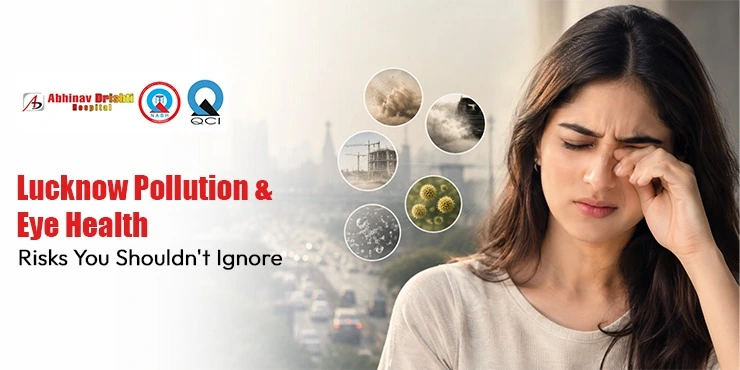
You're riding home through Hazratganj traffic, dusk settling in, when your eyes suddenly start to burn. You blink hard, rub them without thinking, and by the time you reach home, they're red, watery, and irritated. Sound familiar?
Most of us have grown used to talking about pollution in terms of coughs, sore throats, and breathing trouble. But there's another part of the body that's exposed to Lucknow's dust, smoke, and vehicle emissions all day, every day — your eyes. Whether you're weaving through busy intersections on a two-wheeler, walking past a construction site on your way to work, or simply stepping out during a dusty afternoon, your eyes are taking in more than you realise.
This is where consistent Eye Care in Lucknow becomes important — not as an afterthought, but as a genuine part of everyday health, especially for a city where dust and traffic are part of daily life. In this article, we'll walk through exactly how pollution and dust affect your eyes, who is most at risk, practical ways to protect yourself, and when it's time to stop ignoring the discomfort and see a specialist.
Why Are Your Eyes So Vulnerable to Air Pollution?
Unlike your lungs, which are somewhat protected by your nose, throat, and airways before air reaches them, your eyes are directly exposed to the outside environment. There's no filter between the air around you and your eye surface — just a thin layer of tears trying to keep things clean and comfortable.
This means dust particles, smoke, and airborne chemicals can land directly on the surface of your eye, where they may cause irritation almost immediately. The eye does have natural defence mechanisms — blinking, tearing, and the tear film itself — but in a city with heavy traffic and ongoing construction, these defences are often working overtime.
What Is Actually Present in Polluted Air?
On any given day in Lucknow, the air can carry a mix of:
- Dust particles from roads, construction sites, and dry ground
- Vehicle emissions from cars, buses, and two-wheelers
- Smoke from various sources, including seasonal burning
- Construction debris and cement dust
- Pollen and other natural allergens
- Fine particulate matter that's too small to see but easy to feel
None of this means every trip outside will harm your eyes. But repeated, daily exposure — especially without any protection — can add up over time and contribute to ongoing discomfort.
Common Eye Problems Caused or Worsened by Pollution and Dust
If you've ever wondered why your eyes react the way they do after a dusty commute, here's a closer look at the most common issues.
Red and Irritated Eyes
When dust or fine particles settle on the eye's surface, it can trigger mild inflammation, making the eyes look pink or red. This is often the body's natural response to a foreign irritant rather than a sign of infection.
Burning and Stinging Sensation
Smoke, vehicle fumes, and chemical residues in the air can cause a burning or stinging feeling, particularly when the eyes are already dry or sensitive.
Watery Eyes
It might seem strange, but irritation often causes the eyes to produce more tears, not fewer. This is the eye's way of trying to flush out whatever is causing discomfort — dust, smoke, or an allergen.
Dry Eyes
Ironically, despite the watering, pollution can also disrupt the tear film's stability, leaving the eyes feeling persistently dry, gritty, and fatigued, especially later in the day.
Itchy Eyes and Eye Allergies
For people who are sensitive to environmental allergens, dust and pollen in the air can trigger itching, swelling, or repeated allergic flare-ups.
Foreign Body Sensation
That feeling of "something stuck in my eye," even when nothing is visible, is extremely common after exposure to fine dust or grit, particularly for two-wheeler riders.
Quick Answer: Common Symptoms of Pollution-Related Eye Irritation
- Redness
- Burning
- Itching
- Watering
- Dryness
- Grittiness
- Mild blurred vision
- Sensitivity to light
A note on safety: Occasional mild irritation is common and usually settles on its own. However, if symptoms are severe, persistent, or keep coming back, it's worth getting a professional evaluation rather than assuming it will resolve by itself.
Can Lucknow's Pollution Make Dry Eyes Worse?
To understand this, it helps to know a little about how your eyes stay comfortable in the first place.
Quick Answer
Your eyes are protected by a thin layer called the tear film, made up of water, oil, and mucus. This film keeps the eye surface smooth and comfortable. Pollution and dust can speed up the evaporation of this tear film or destabilise it, which is one reason dry eye symptoms often feel worse on high-traffic, high-dust days.
People who spend long hours outdoors — commuting, working on-site, or simply running errands across the city — are especially likely to notice this. It's also worth remembering that pollution rarely acts alone. Long hours in front of screens, time spent in air-conditioned offices, and now, added dust exposure outside, can combine to make dry eye symptoms noticeably worse.
Signs Your Dry Eyes May Need Medical Attention
- Persistent dryness that doesn't improve with rest
- Eyes that feel dry even indoors
- Frequent redness alongside dryness
- Blurred vision that comes and goes
- Discomfort that affects reading, screen use, or driving
If these signs sound familiar, it may be time to explore proper dry eyes treatment with a qualified eye specialist rather than relying on guesswork.
Dust, Pollution and Eye Allergies: What's the Connection?
Not every case of eye irritation is the same, and it helps to understand the difference between temporary irritation and a genuine eye allergy.
Temporary irritation usually happens because of direct exposure — a gust of dusty wind, smoke from a nearby vehicle, or fine debris from a construction site. Eye allergies, on the other hand, tend to involve the body's immune response to specific allergens like pollen or dust mites, and often affect people who are already sensitive to such triggers. Seasonal changes in Lucknow can also influence how often these allergic flare-ups occur.
| Temporary Eye Irritation | Eye Allergy |
|---|---|
| Often caused by direct exposure | Often linked to allergens |
| May improve after washing eyes | May repeatedly occur |
| Grittiness may be common | Itching may be more prominent |
If your symptoms follow a pattern — flaring up during certain seasons or after specific exposures — it may point toward an allergic component, which is best confirmed through eye allergy treatment in Lucknow guided by a specialist.
Who Is Most at Risk of Pollution-Related Eye Problems?
While anyone can experience discomfort from dust and pollution, some groups tend to notice it more.
Children
Children often spend time playing outdoors and are less likely to avoid rubbing their eyes with dusty hands, which can increase irritation. Supervision and simple hygiene habits go a long way here.
Two-Wheeler Riders
Anyone who commutes by scooter or motorcycle in Lucknow knows the feeling of watery, gritty eyes after a ride through busy roads. Direct wind exposure combined with dust and emissions makes this group particularly vulnerable.
Outdoor Workers
People who work outside for extended periods — vendors, delivery workers, site staff — face prolonged exposure throughout the day, which can add up to more noticeable symptoms.
Contact Lens Users
Lenses sit directly on the eye surface, and dust or pollutants can get trapped underneath them, causing additional discomfort compared to people who don't wear lenses.
Senior Citizens
Older adults may already have naturally drier eyes or other age-related eye surface changes, making them more sensitive to environmental irritants.
People With Existing Dry Eyes or Allergies
If you already deal with dry eyes or seasonal allergies, added exposure to dust and pollution can make existing symptoms feel more intense.
How to Protect Your Eyes from Lucknow's Dust and Pollution
The good news is that most pollution-related eye discomfort can be reduced with a few consistent habits.
1. Wear protective sunglasses outdoors. A well-fitted pair of sunglasses acts as a physical barrier against dust, wind, and bright sunlight, especially during peak traffic hours.
2. Use properly fitting eyewear while riding two-wheelers. Riding glasses or a full-face helmet visor can significantly reduce direct exposure to dust and wind while commuting.
3. Avoid rubbing your eyes with dirty hands. Rubbing can push dust particles further into the eye and increase irritation, so it's better to rinse with clean water instead.
4. Wash your face after prolonged outdoor exposure. A simple splash of clean water after returning home can help remove dust and pollutants sitting on the skin and eyelids.
5. Maintain good hand hygiene. Since hands frequently come into contact with the eyes, keeping them clean reduces the chance of transferring dust or irritants.
6. Stay hydrated. Adequate water intake supports overall tear production and can help the eyes stay more comfortable throughout the day.
7. Take regular breaks from screens. Screen use reduces blink rate, which can worsen dryness. Short breaks help maintain a healthier tear film, especially when combined with outdoor pollution exposure.
8. Follow proper contact lens hygiene. Clean lenses as directed, avoid wearing them longer than recommended, and never skip proper lens care routines, particularly on high-pollution days.
9. Avoid self-medicating with random eye drops. Not all eye drops are suitable for every kind of irritation, and using the wrong one can sometimes do more harm than good.
10. Consult an eye specialist if symptoms persist. If discomfort continues despite these precautions, it's a sign to get a proper eye examination rather than waiting it out.
Is It Safe to Use Eye Drops for Pollution-Related Irritation?
It's tempting to reach for the nearest eye drop when your eyes feel irritated, but this isn't always the safest approach.
Artificial tears may be recommended by professionals for certain types of dryness or irritation, as they help supplement the eye's natural tear film. However, redness-relief drops should not be used unnecessarily, since long-term or frequent use can sometimes mask underlying issues rather than resolve them. Steroid eye drops, in particular, should never be self-prescribed, as they require proper medical supervision and monitoring.
If your eyes are frequently uncomfortable, the safest step is a proper consultation rather than trial-and-error with over-the-counter products.
Should Contact Lens Users Be More Careful During High Pollution Days?
Yes. Contact lenses sit directly on the eye's surface, which means any dust or pollutant in the air has a more direct path to causing irritation.
On days with visibly poor air quality or heavy dust, it's worth paying extra attention to lens hygiene, replacing lenses as recommended, and avoiding lens wear if your eyes are already irritated or watery. If discomfort continues even with proper care, switching to glasses temporarily and consulting your eye specialist is a reasonable precaution.
How to Protect Your Eyes While Travelling on Lucknow Roads
Anyone who's commuted through areas with heavy traffic, ongoing metro or road construction, or open dust exposure knows how quickly eye irritation can set in. Whether you're navigating a two-wheeler through busy junctions or walking past a construction zone on your daily route, a few simple habits can make a real difference.
Wearing wraparound sunglasses or a helmet visor reduces direct wind and dust exposure. Keeping car windows up in heavy traffic and using cabin air filters, where available, can also help. If you know you'll be passing through a particularly dusty stretch, consider carrying a small bottle of clean water to rinse your eyes if needed. These small adjustments, repeated daily, can meaningfully reduce the cumulative effect of dust and pollution on your eyes.
When Should You See an Eye Specialist?
While mild, occasional irritation is common and often resolves on its own, certain symptoms should never be ignored. Prompt professional evaluation is recommended if you experience:
- Severe eye pain
- Sudden vision changes
- Persistent blurred vision
- Injury caused by dust or foreign material
- Extreme redness
- Sensitivity to light
- Persistent watering that doesn't settle
- Symptoms that don't improve despite basic precautions
These signs don't necessarily point to a serious condition, but they do warrant a proper examination rather than assumptions or self-treatment.
Why Regular Eye Care Is Important in a Polluted Environment
Living in a city where dust and pollution are part of daily life makes routine eye examinations more valuable, not less. Regular check-ups allow early identification of eye surface problems, proper management of dry eye or allergy symptoms, and better long-term protection of your vision.
This is exactly why routine eye health services shouldn't be treated as something you seek out only when a problem becomes severe. A yearly or twice-yearly check-up, especially for those who commute frequently or work outdoors, can catch small issues before they turn into bigger ones. If persistent dryness or irritation is affecting your daily routine, a professional eye specialist consultation can help identify the underlying cause and guide appropriate treatment.
How Abhinav Drishti Eye Hospital Supports Comprehensive Eye Care
As an eye hospital in Lucknow, Abhinav Drishti Eye Hospital provides comprehensive eye care and professional eye examinations for patients experiencing a range of eye concerns, from everyday irritation and dryness to allergy-related symptoms and more specialised conditions.
For residents dealing with ongoing discomfort linked to dust and pollution exposure, a proper comprehensive eye examination can help identify whether the issue is simple irritation, an underlying dry eye condition, or an allergic response — and guide the right next steps accordingly. The focus, ultimately, is on consulting qualified eye specialists rather than relying on guesswork, especially when symptoms persist or repeat.
Conclusion
Pollution affects more than just your lungs and throat — your eyes are exposed to dust, smoke, and airborne particles every single day, whether you're commuting through Lucknow's traffic, walking past construction sites, or simply spending time outdoors. Redness, burning, watering, dryness, and irritation are common responses to this exposure, and while occasional discomfort is normal, persistent symptoms should never be ignored.
Simple preventive habits — protective eyewear, good hygiene, staying hydrated, and avoiding self-medication — can go a long way in reducing daily exposure and discomfort. But when symptoms persist or worsen, timely professional attention makes the difference between simple prevention and a problem left unaddressed.
If you've been experiencing ongoing eye irritation, dryness, redness, or any changes in your vision, it's worth getting a proper evaluation rather than waiting it out. The team at Abhinav Drishti Eye Hospital is available to help you understand what's causing your symptoms and guide you toward the right care for your eyes.